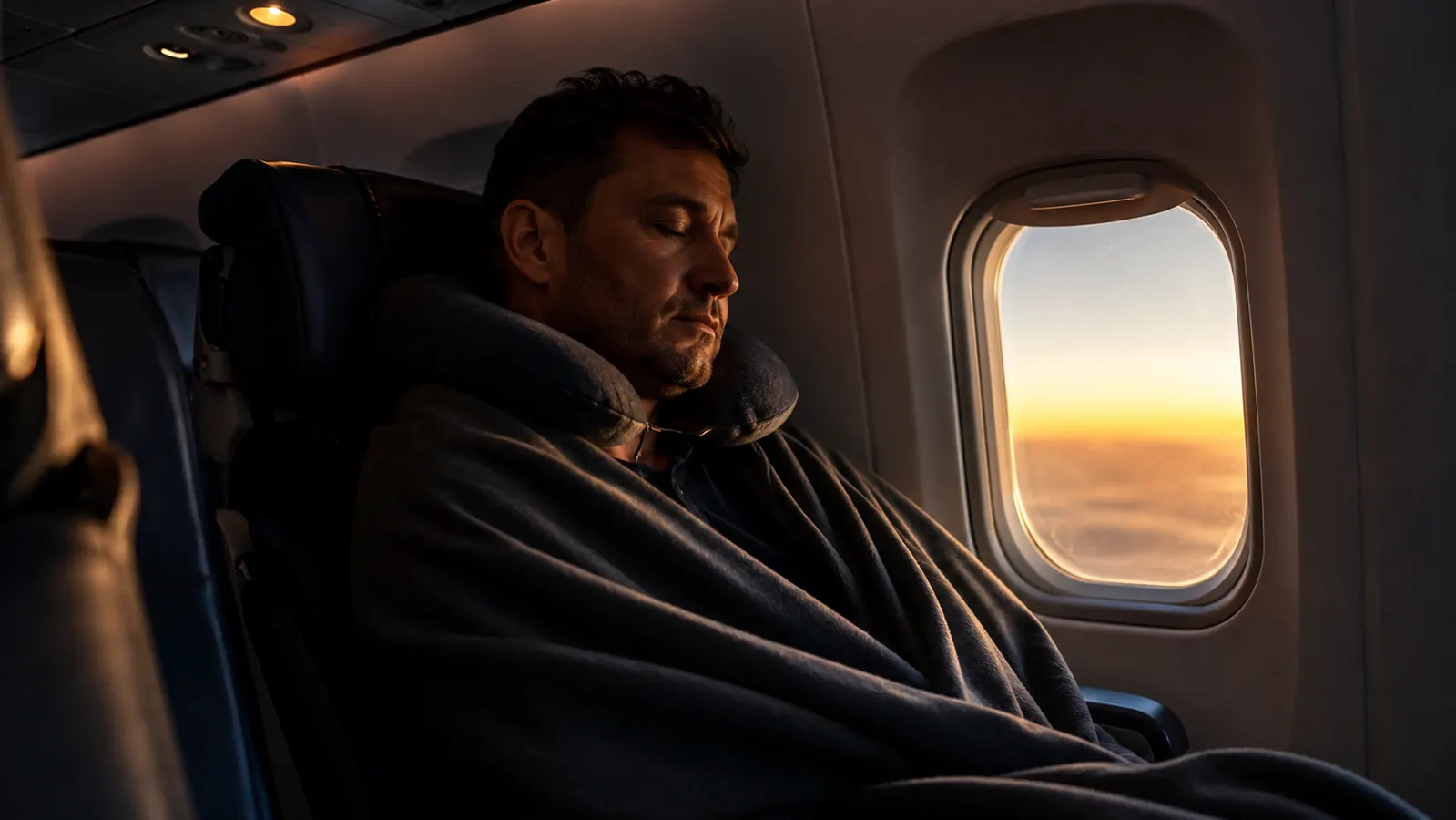
I have done 14 hours from Los Angeles to Sydney, 11 hours from New York to Johannesburg, and more red-eye flights across the continental US than I care to count. For years, I arrived wrecked. Stiff neck, foggy brain, a full day written off. I kept thinking the problem was just that planes are uncomfortable and that is how it is. Turns out, most of what was wrecking me was fixable, and most of the fixes cost almost nothing to implement.
Sleeping on a long-haul flight is a skill. It is not about being lucky enough to get an empty row or scoring business class. It is about setting yourself up methodically, starting before you board. The traveler who arrives refreshed usually made five or six small decisions the night before and the hour before takeoff that the exhausted traveler next to them skipped. This guide covers every one of those decisions, in the order they matter.
If you only add one piece of gear before your next long-haul flight, make it this.
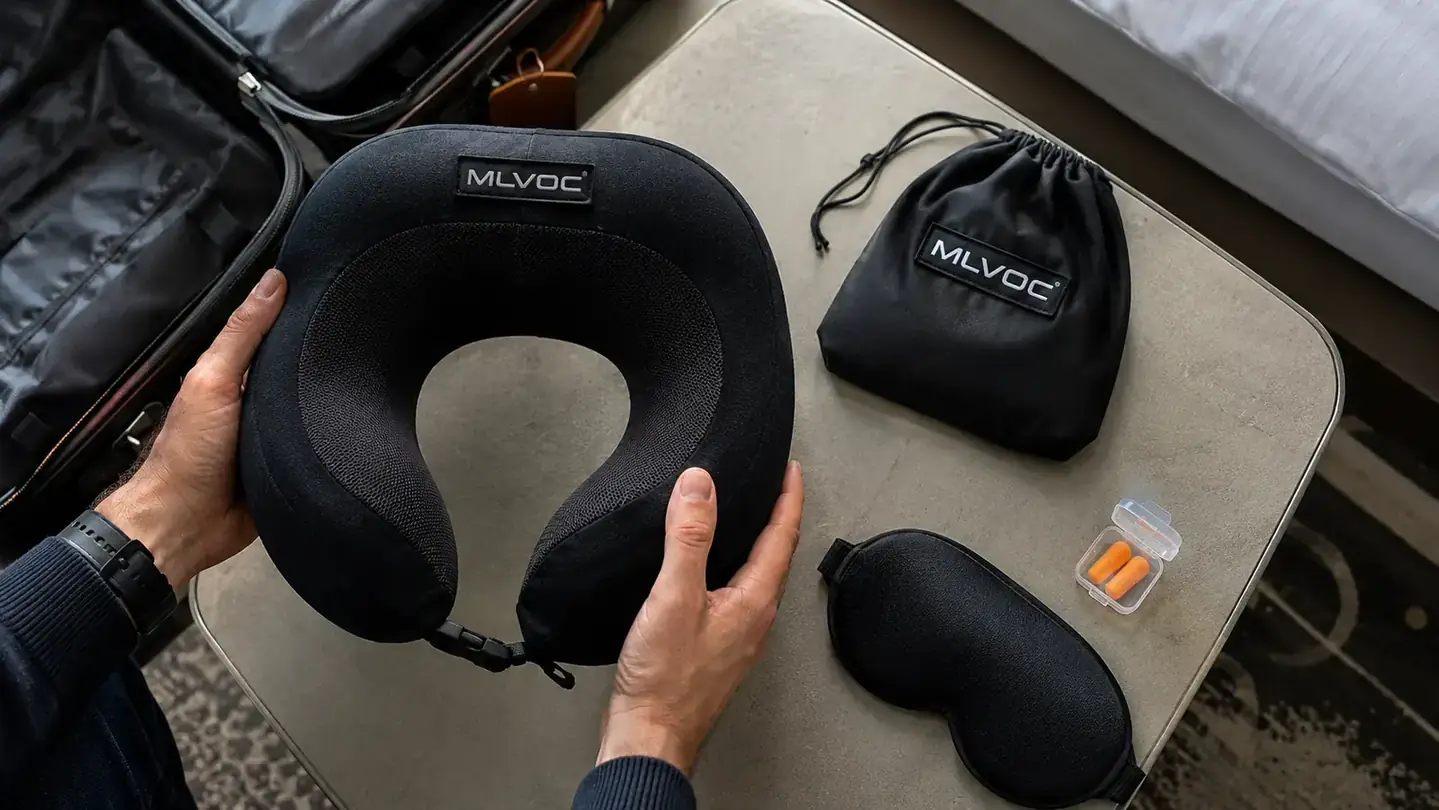
The MLVOC memory foam travel pillow comes with a 3D eye mask, earplugs, and a carry bag. It is the one kit that handles the three biggest sleep disruptors on a plane: neck pain, light, and noise. Over 35,000 Amazon reviews back it up.
Amazon Check Today's Price on Amazon →Step 1: Choose Your Seat Like Your Sleep Depends on It (Because It Does)
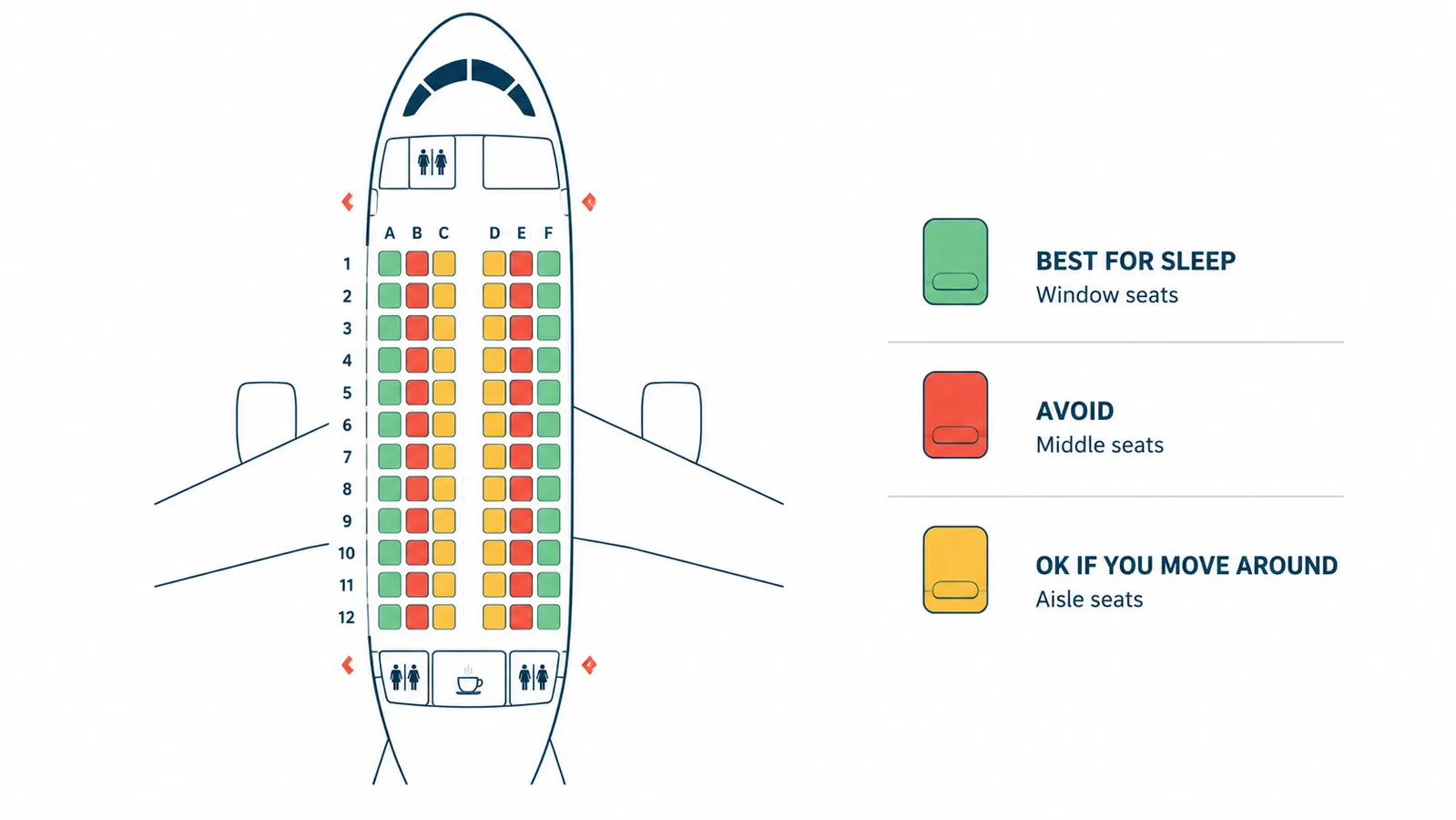
Seat selection is the highest-leverage decision you make before a long-haul flight, and most people get it wrong by defaulting to whatever is available or picking the aisle out of habit. For sleeping, a window seat in a row that reclines fully is nearly always the right call. Here is why: you have a wall to lean against. That wall becomes your best sleeping surface on a night flight. No one climbing over you, no turbulence-related elbow-checks from an aisle neighbor, and you control whether the shade goes up or down.
Use SeatGuru or the airline's own seat map to find seats that recline without restriction. Exit rows and seats directly in front of the exit row or a bulkhead often do not recline at all. Avoid the last row before the galley for the same reason, plus the added noise and foot traffic. On a widebody like a 787 or A350, window seats at the very rear of economy have more curvature to lean into. On a 777, the three-across window section gives you two armrests to claim if you travel with a partner.
If you have elite status or can pay a small upgrade fee for a seat with extra recline, do it for any flight over eight hours. The math on that purchase versus a wasted arrival day is obvious. Book your seat as early as possible, ideally at purchase. Seat availability narrows fast on popular routes.
Step 2: Set Your Circadian Clock Before You Board
The cabin cannot fix your body clock, but you can start adjusting it before you ever step on the plane. If you are flying west to east (the harder direction), push your bedtime two hours earlier for two nights before departure. If flying east to west, stay up two hours later. This is not a cure for jet lag, but it meaningfully reduces the deficit you arrive with.
On the day of your flight, match your eating schedule to your destination timezone wherever possible. Avoid heavy carbohydrate-loaded meals in the three hours before boarding. They spike and crash your blood sugar at exactly the wrong time. Hydrate aggressively on the ground because cabin humidity typically sits between 10 and 20 percent, drier than most deserts, and dehydration degrades sleep quality noticeably. Skip alcohol at the airport lounge even though it seems like it would help. Alcohol suppresses REM sleep and makes dehydration significantly worse.
Step 3: Build Your Sleep Kit Around the Three Biggest Disruptors
Three things reliably destroy sleep on a plane: neck strain, light, and noise. Everything else is secondary. If you address all three, you can sleep on almost any flight. If you skip even one, you will feel it.
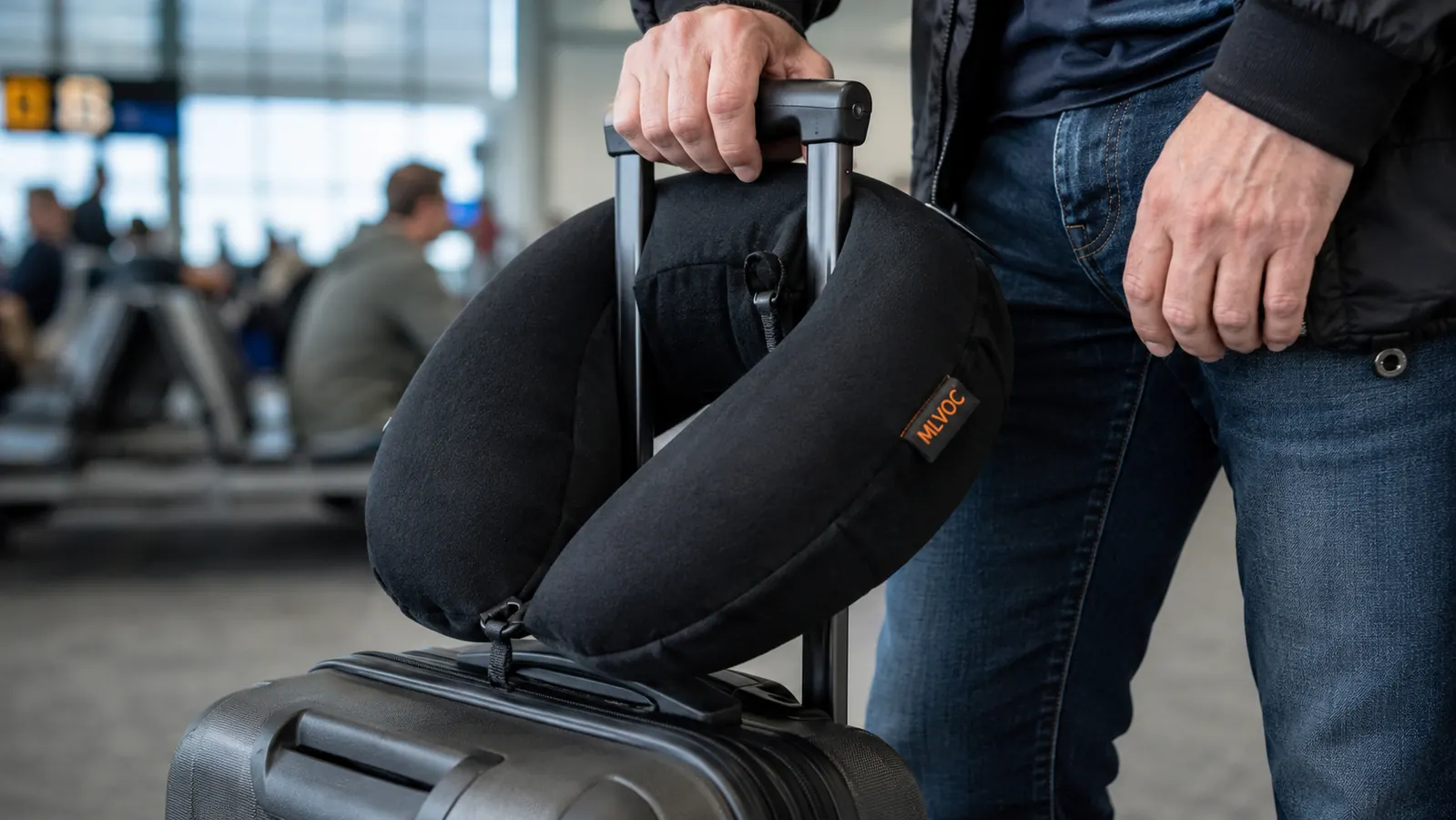
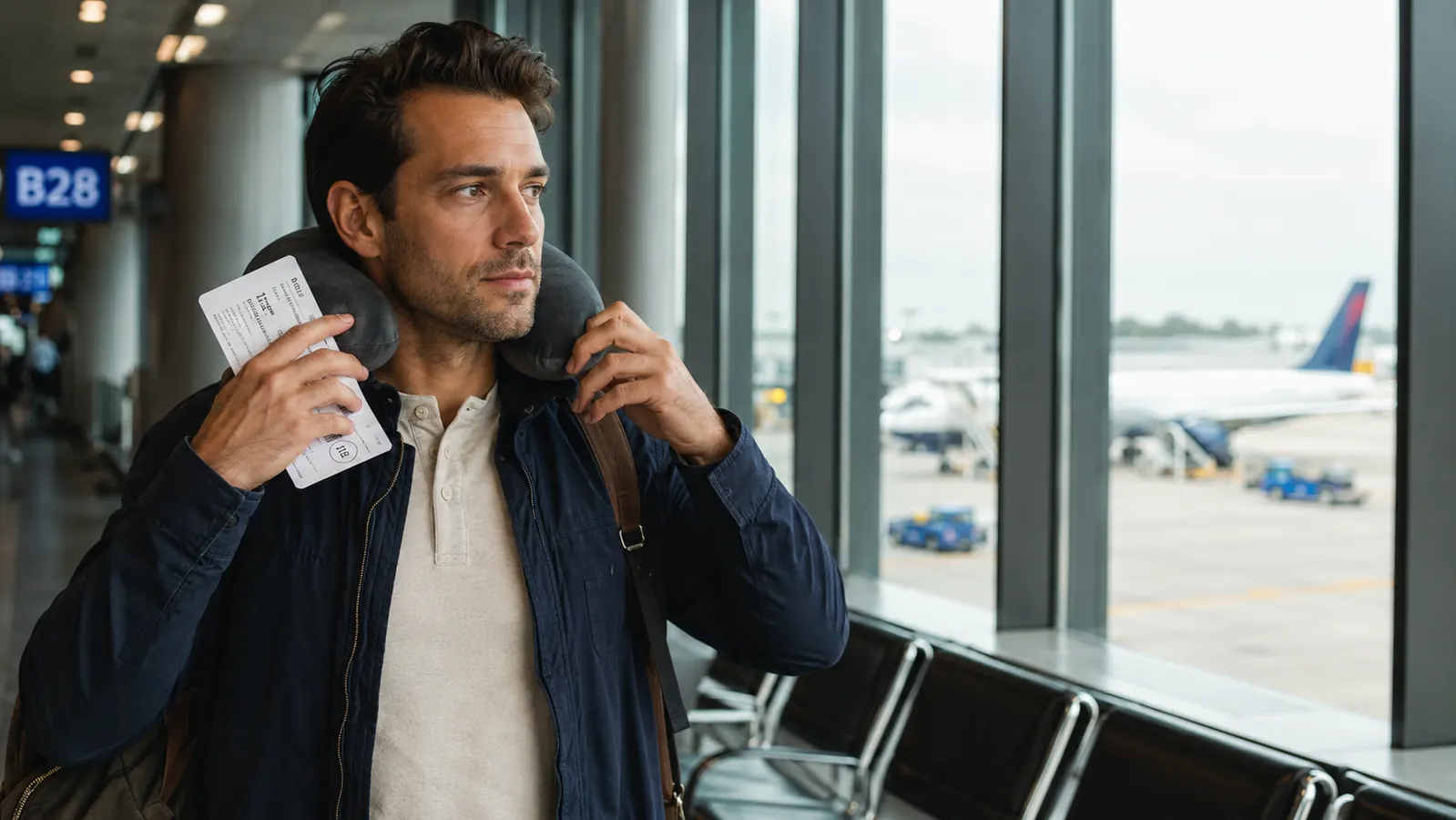
For neck support, a quality memory foam travel pillow is not optional on flights over six hours. The free airline pillow is a flat square of polyester that provides about as much support as a folded napkin. A proper memory foam pillow keeps your head from dropping forward or sideways during the transition from wakefulness to sleep, which is the moment most people jerk awake and give up on sleeping entirely. The MLVOC neck pillow uses 100 percent pure memory foam that contours to your specific neck shape rather than bottoming out the way hollow fiber or inflatable pillows do. The cover is breathable and machine washable, which matters more than it sounds after 14 hours in a recycled-air cabin.
For light, a contoured 3D eye mask is far better than a flat one. Flat masks touch your eyelids directly, which many people find uncomfortable and which creates pressure that actually makes it harder to relax. A 3D mask creates a hollow space over each eye, so your lashes and lids are free. The MLVOC travel kit includes a 3D mask with this exact design. For noise, the included foam earplugs are a solid baseline that reduce cabin noise by around 30 decibels. If you fly frequently, add a pair of noise-canceling earbuds or headphones on top of the earplugs for layered attenuation. The combination is noticeably better than either alone.
Three things wreck sleep on planes: neck strain, light, and noise. Fix all three before you board, and most long-haul flights become manageable. Skip one, and you will feel it when you land.
Step 4: Set Up Your Sleep Environment Before Takeoff
Do not wait until the cabin lights dim to get yourself ready to sleep. The transition from alert to drowsy happens faster when your environment is already prepared. Put on your neck pillow before taxi if you plan to sleep early in the flight. If your goal is to sleep on the first half of a night flight, take your shoes off and stow them in the seat pocket or under the seat in front as soon as you sit down. Loosen or remove your belt. Layer up: cabin temperature usually drops significantly two hours into a long flight, and asking a flight attendant for a blanket at that point wakes you fully if you managed to drift off.
Download your media before boarding, not mid-flight over spotty Wi-Fi. Use a sleep timer or limit your screen time intentionally. The blue light from phone or tablet screens suppresses melatonin for up to two hours, so if you want to sleep on the first half of the flight, close the screen within the first 30 minutes. A curated playlist of familiar, low-stimulus music or a long-form podcast you have heard before works better than trying to watch a movie you care about and then switching off.
Step 5: Use a Timing Strategy, Not Just Willpower
The most common mistake long-haul travelers make is treating sleep on the plane as something that either happens or does not. The travelers who land well-rested are almost always the ones who planned a specific sleep window and protected it. For a 12-hour overnight flight, a reasonable target is five to six hours of sleep starting about 90 minutes after takeoff. That 90 minutes is buffer time for the meal service, settling in, and letting your body wind down from airport stress.
If your destination is in a different timezone, calculate what local time it will be when you land and work backward. If you land at 7am local time, you want to arrive having slept enough to function through at least noon without collapsing. A melatonin supplement at the start of your planned sleep window can help you fall asleep faster without the hangover effect of sleep medications. Start with a low dose, 0.5mg to 1mg, rather than the 5mg to 10mg doses that are commonly sold but that many sleep researchers consider unnecessarily high for most adults.
Resist the temptation to take the airline's full sleep medication offering unless you have used it on a long-haul flight before and know how your body responds. Arriving groggy and disoriented in an unfamiliar city is worse than arriving tired.
What Else Helps
A few additions that are worth including in your kit: compression socks reduce leg swelling on flights over eight hours, which directly affects how rested you feel on arrival. A small travel blanket that packs into its own pouch is more reliable than hoping the airline has enough to go around. Travel slippers or thick socks keep your feet warm without wearing shoes for 12 hours. If you run warm, a portable USB fan that clips onto your seat tray keeps air moving and provides a gentle white noise layer on top of your earplugs.
One thing that is consistently overrated: the inflatable foot hammock that hangs from your tray table. On paper it sounds like it would help, but it shifts your center of gravity in a way that actually makes neck and lower back strain worse for most people. Save the carry-on space. What does consistently help: getting up once per three-hour block to walk two lengths of the aisle. Your blood circulates better, your lower back releases, and you return to your seat ready to fall asleep again rather than lying there stiff and restless.
For deeper reading on the MLVOC pillow specifically, including how the hood support compares to a standard U-shaped neck pillow and whether the memory foam holds up over dozens of flights, the full review covers everything: MLVOC Travel Pillow Review: Six Months of Long-Haul Flights Later. If you are deciding between the MLVOC and the Cabeau Evolution, the side-by-side breakdown is here: MLVOC vs Cabeau Evolution: Head-to-Head Travel Pillow Comparison.
Your neck pillow is the one thing you will reach for on every long-haul flight.
The MLVOC memory foam travel pillow is rated 4.3 stars across more than 35,000 reviews and ships with a 3D eye mask, earplugs, and a carry bag. Everything you need to address all three of the major sleep disruptors in one kit.
Amazon Check Today's Price on Amazon →