
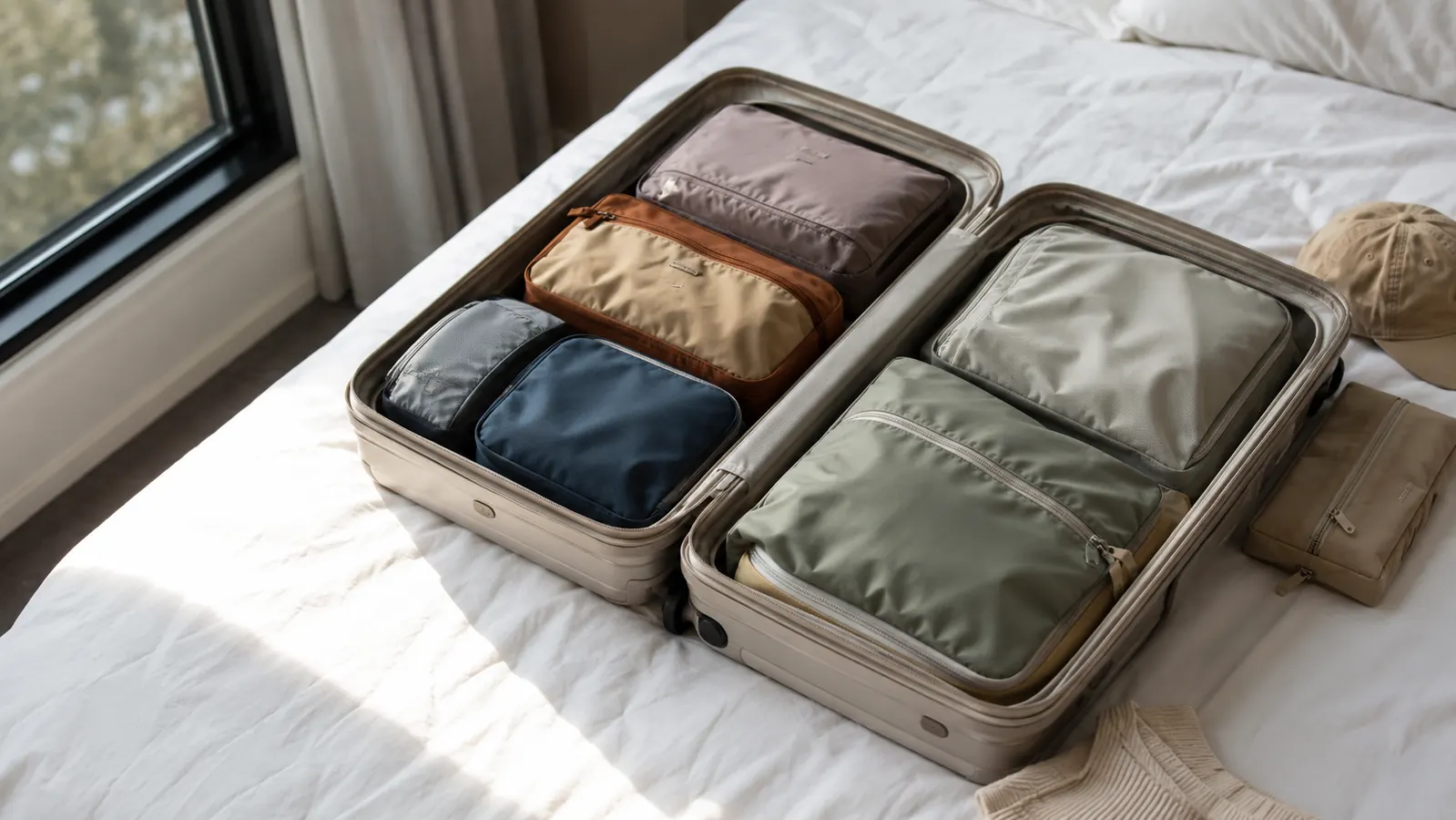
I used to be a chronic over-packer. Two weeks for a five-day trip, routinely. I paid checked bag fees on routes I had no business paying them on, I waited at carousels, and I once watched my bag miss a connection in Frankfurt while I made it just fine. That last one fixed me. Since then I have done every trip carry-on only, including a nine-day loop through Portugal and a seven-day work trip with four different meetings that required real clothes. Not a single checked bag. The difference was not willpower. It was a system, and the center of that system is a set of packing cubes.
Most travelers think carry-on only means sacrificing clothes or living in the same shirt three days running. That is not true. What it actually requires is a structured approach to what you choose and how you compress it. This guide walks you through the exact steps I use, including which size cubes handle which categories, how the bundle and roll hybrid works for dress clothes, and why your shoes are probably the one thing standing between you and a truly packed-down bag.
Packing cubes are the reason this system works. Without them, the steps below still leave you with a bag that won't close.
The Veken 10-set packing cubes are what I use. They come in four sizes, the zippers actually hold under compression, and with 33,000+ reviews at a 4.6 rating they are not a gamble.
Amazon Check Today's Price on Amazon →What You Need Before You Start
The right carry-on bag matters more than most people realize. You want something that fills the full overhead bin allowance, which on most US carriers is 22 x 14 x 9 inches. A bag a few inches short of that is a few inches of wasted packing volume. International carriers, especially budget European ones, run smaller, so if you fly Ryanair or easyJet regularly, check their specific limits. For this guide I am assuming a standard domestic carry-on at the full 22 x 14 x 9 size.
You also need packing cubes. I want to be direct about this: without cubes, the steps below are harder to execute and easier to unravel at your hotel when you are tired and just want to find a clean shirt. The Veken 10-set comes with two extra-large cubes, two large, two medium, two small, and two for shoes or toiletries. That variety is what makes the category-based system in this guide work. If you already own cubes in just one or two sizes, you can still follow along, but you may need to adapt the groupings.
Step 1: Build Your Packing List Before You Touch a Single Item of Clothing
This step sounds obvious. Almost nobody actually does it. Write down every outfit you plan to wear, day by day, not just a pile of items. Day 1: jeans, white tee, light jacket. Day 2: chinos, button-down, same jacket. Day 3: repeat jeans from Day 1 with a different top. That exercise surfaces two things fast: which items are pulling double duty, and which items you were going to pack as 'just in case' backups that you have never actually needed on any trip.
For a seven-day trip, a solid carry-on wardrobe looks like this: four to five tops, two to three bottoms (one of which is your travel day outfit and can be worn again), two pairs of shoes maximum, one layer for cold rooms or evenings, four days of underwear and socks washed mid-trip, and any workout or specialized clothes only if the itinerary genuinely requires them. That list fits. A list built around 'I might need it' does not.
Once your list is written, lay everything out flat on your bed. Look at it as a whole before packing a single item. This is where most people discover they have three black tops and only needed one, or that two of their shoes are nearly identical. Editing the pile before it goes into cubes is much easier than repacking at midnight.
Step 2: Assign Every Category to a Cube Size
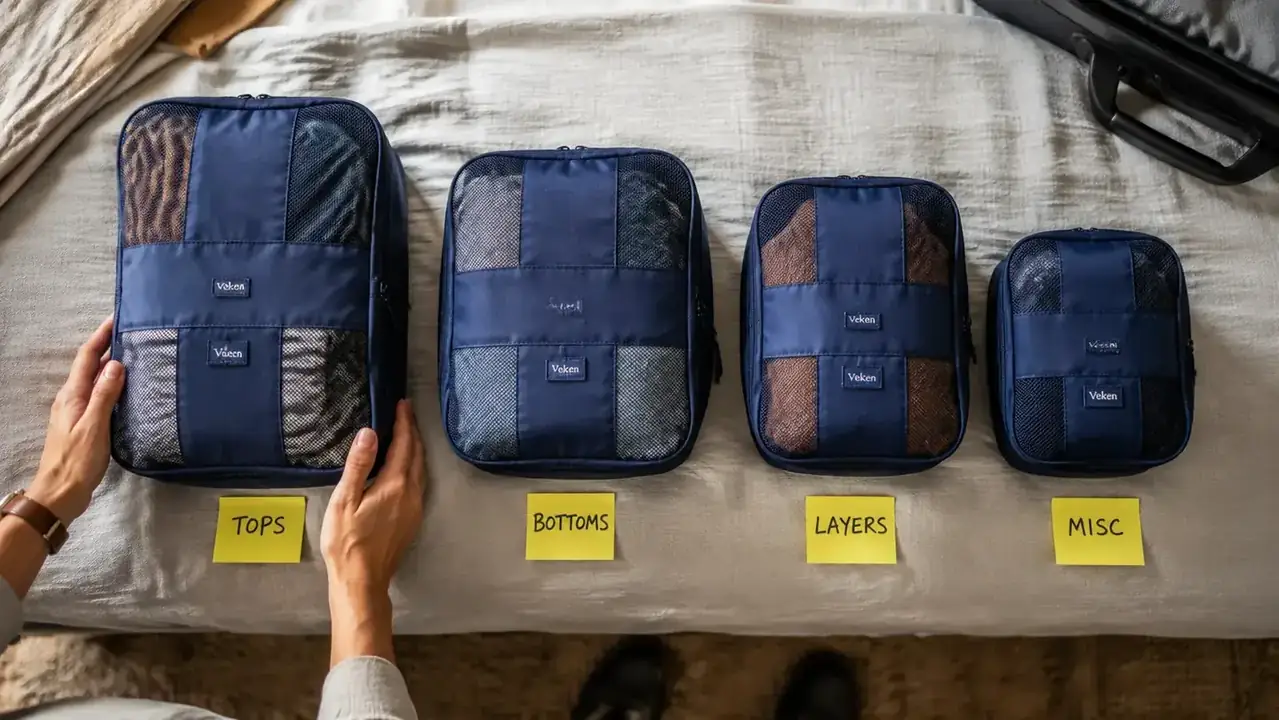
The Veken set gives you enough size variety to separate your clothes by category rather than just stuffing by volume. Category packing is the key to finding things quickly mid-trip without emptying your bag. My standard assignments: extra-large cube for tops and layering pieces, large cube for bottoms, medium cube for underwear and socks, small cubes for tech accessories or a toiletry overflow, shoe bags for footwear. Each cube has one job.
The advantage of this system shows up on day three of a trip, not day one. When you need a specific pair of socks or your one nicer shirt for a dinner, you open one cube and find it. You do not dig. You do not unfold everything else. And when you repack to move to the next city, you just zip the cubes back up. Each cube is its own drawer.
Step 3: Roll Everything That Rolls, Bundle What Doesn't
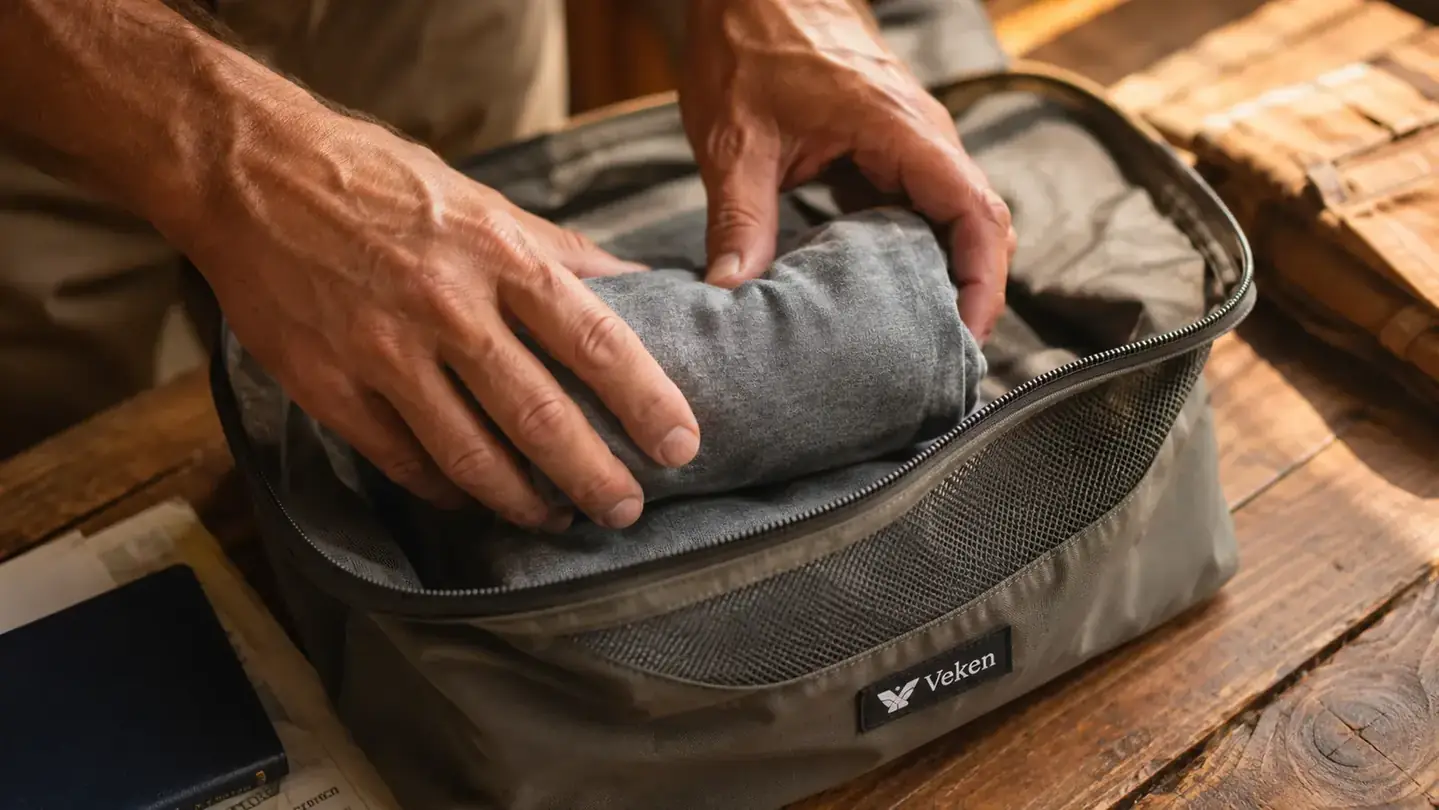
Rolling is not a trend. It is a space-saving technique with real results, but it works better on some fabrics than others. T-shirts, jeans, casual pants, underwear, socks: roll them tight. A rolled t-shirt compresses to roughly half the volume of a folded one and tucks into the gaps inside a cube that flat-folded clothes cannot reach. Stack your rolled items vertically in the cube so you can see every piece at once, military-style, rather than layering them and only seeing the top item.
For dress shirts, blazers, or anything with a collar or structured shoulder, rolling creates creases you do not want. Use the bundle method instead: lay the item flat in the cube, fold arms inward, then fold the body of the shirt around the other items in that layer. This creates a central core that the outer pieces wrap around, reducing the leverage that causes fold-line creases. It takes two extra minutes and saves you a pressing fee at the hotel.
Jeans deserve a specific note. Most people fold jeans and give them the full length of the suitcase. Instead, fold each pair in half lengthwise once, then roll tightly from the waist down. One pair of adult jeans rolled this way fits inside a large Veken cube alongside a second pair with room for a belt. That is a meaningful compression gain.
Rolling is not a trend. A rolled t-shirt compresses to roughly half the volume of a folded one. Roll everything that can wrinkle without consequences. Bundle what can't.
Step 4: Pack Your Shoes First, Then Build Around Them
Shoes are the most rigid items in your bag and they set the floor of your packing volume. Pack them first, along the back wall of your carry-on where the wheels are, soles facing out. Stuff socks or small items inside the shoes themselves to use that dead space. With the Veken shoe bags, your shoes stay clean and separate from your clothes, which matters more after a long day of walking than it does at the beginning of a trip.
Two pairs of shoes is the practical limit for a week-long carry-on trip. One pair that covers casual and walking, one pair that covers anything requiring a step up in formality. If you need a third pair for a specific activity, consider wearing the bulkiest pair on the plane and packing the other two. Your feet do not count against your carry-on allowance.
Step 5: Load Cubes into the Bag in Order of When You'll Need Them
Once your cubes are packed, think about access order before you close the suitcase. The items you need first at your destination should be the last ones in and the first ones out. If you are landing and going straight to a meeting, your outfit cube goes on top. If you are landing late and heading to bed, your toiletry bag and pajamas go on top. This sounds minor until you are in a hotel room at 11pm digging through a fully packed carry-on to find your toothbrush.
For most trips, I load in this sequence: shoes against the back wall, then bottoms cube flat across the base, tops cube on top of that, medium cube for underwear and socks along the side, small cubes and any flat items (documents, book, laptop sleeve) along the lid. That arrangement keeps the heavy and rigid things low and the soft things accessible.
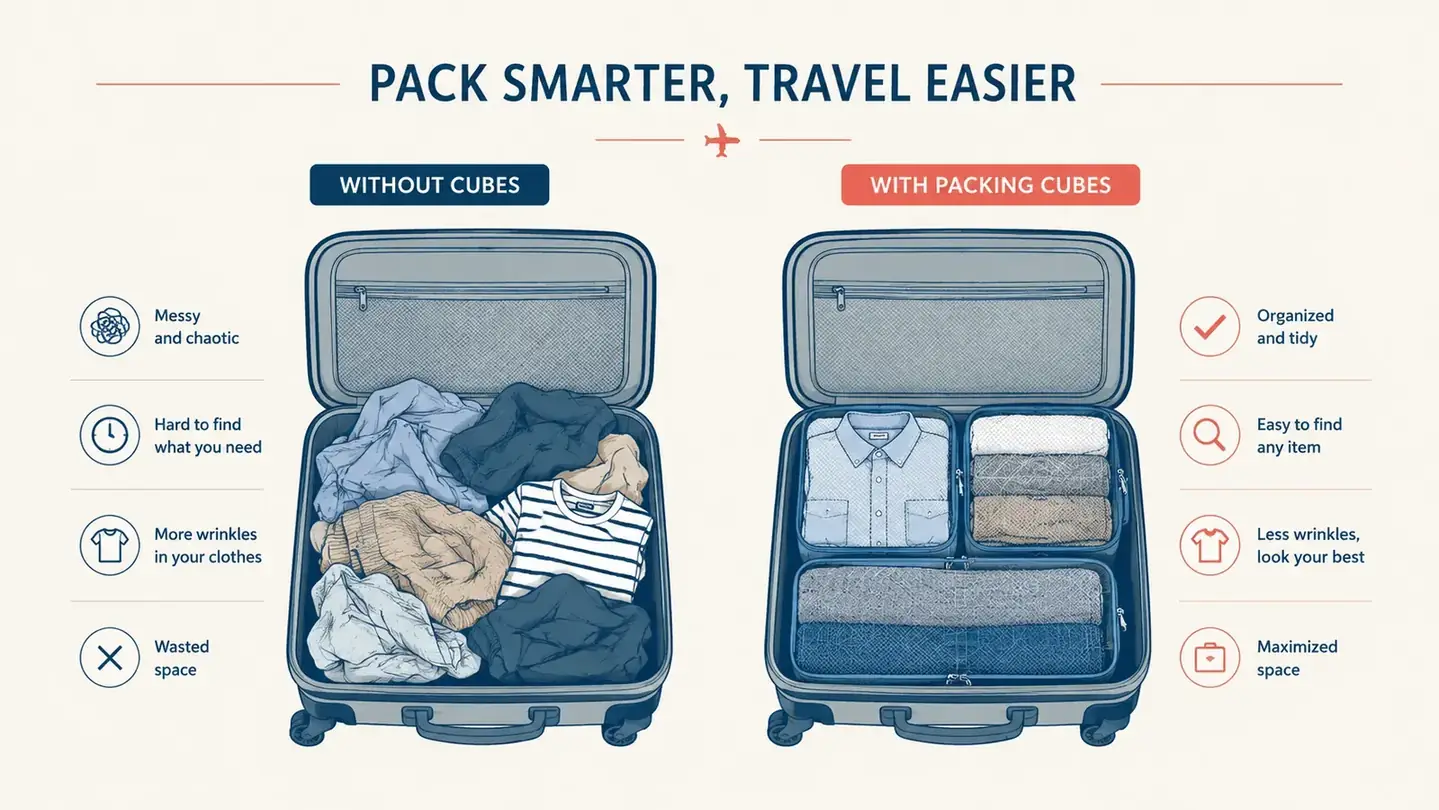
One thing that surprises people: packing cubes actually help your bag close more easily, not less. Loose clothes compress against each other in ways that create uneven pressure on the zipper. Cubed clothes hold their shape and distribute pressure evenly around the bag. The first time I zipped a carry-on using this system, I had about two inches of clearance I had never had before, even with the same clothes I had been packing loosely for years.

What Else Helps
A few other things consistently make or break the carry-on-only goal. First, toiletries. You are limited to 3.4 oz containers in a quart-size bag for liquids through security. Buy travel-size versions of your essentials once and refill them from your home bottles. A full-size shampoo bottle is one of the most common reasons people check bags they did not need to check. Second, do your laundry once mid-trip for anything longer than five days. A small packet of sink-wash detergent weighs almost nothing and gives you a clean base layer by morning. Third, your personal item, whether a backpack or tote, is not your overflow bag. Use it for the items you actually want during the flight: headphones, snacks, your laptop. If you are using it to expand your packing because your carry-on is too full, your packing list is still too long.
The Veken set also includes two mesh bags that work well for dirty laundry. At the end of each day, worn items go in a mesh bag rather than back in the clean cube. This keeps the clean-dirty separation clear without needing a second bag, which matters on longer trips where you are pulling from both categories.
A Note on What to Skip
There are packing tricks that get passed around online that I have tested and mostly stopped using. Vacuum compression bags: they compress well, but you cannot re-compress at the hotel and your clothes come out wrinkled in ways packing cubes do not cause. Space bags require a vacuum at both ends of the trip or you are carrying the same volume back. The bundle packing method alone, without cubes, works but everything slides around when you open the bag at the hotel. The cubed-and-rolled system in this guide is slower to set up the first time, but it is repeatable, consistent across every trip, and fast to execute by trip three.
For more on why packing cubes are worth the specific investment, the long-term Veken packing cubes review covers 18 months of real trip use including zipper durability and size accuracy. If you are deciding between the Veken set and a compression alternative, the Veken vs BAGAIL comparison breaks down exactly which one compresses better and for which type of traveler.
If you are going to try this system, start with the right cubes. The Veken 10-set is what makes the category-based approach actually stick.
Four sizes, solid zippers, and enough pieces to cover every category from tops to shoes. Used by more than 33,000 travelers with a 4.6-star rating. The price makes it easy to commit.
Amazon Check Today's Price on Amazon →